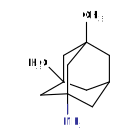
Memantine is an NMDA receptor antagonist used to treat moderate to severe dementia in Alzheimer's. It is different from many other Alzheimer's Disease medications, as it works by a different mechanism than the cholinesterase enzyme inhibitors normally employed in the management of Alzheimer's disease.
- Mechanism
- Curator reviewed · 1 reference
Continuous activation of the N-methyl-D-aspartate (NMDA) receptors in the central nervous system caused by glutamate is thought to cause some of the Alzheimer's disease symptoms. This overactivation is thought to contribute to neurotoxicity due to the excitatory properties of glutamate. The pharmacological effect of memantine likely occurs via the drug's behavior as an uncompetitive (open-channel) NMDA receptor antagonist, preventing glutamate action on this receptor. Memantine has a preference for the NMDA receptor-operated cation channels. Despite these antagonist effects, memantine has not been proven to prevent or retard the neurodegeneration seen in patients diagnosed with Alzheimer’s disease.
- Primary indication
- Memantine is used to manage moderate to severe Alzheimer's dementia.Curator reviewed · 8 structured indications
- Formula / weight
- C12H21N · 179.3018 g/mol (avg)
- First approval
- Canada, 2004 · United States, 2003 · European Union, 2016
- Code names
- D-145 · DRG-0267
- Brand names
Resolves to
BUGYDGFZZOZRHP-UHFFFAOYSA-NSMILESCC12CC3CC(C)(C1)CC(N)(C3)C2What you can answer from here — as of September 23, 2026
Which drugs share a target with Memantine, and which of those have an active Phase 3 trial?
Create a free account or log in to explore the full data card.
Create Account